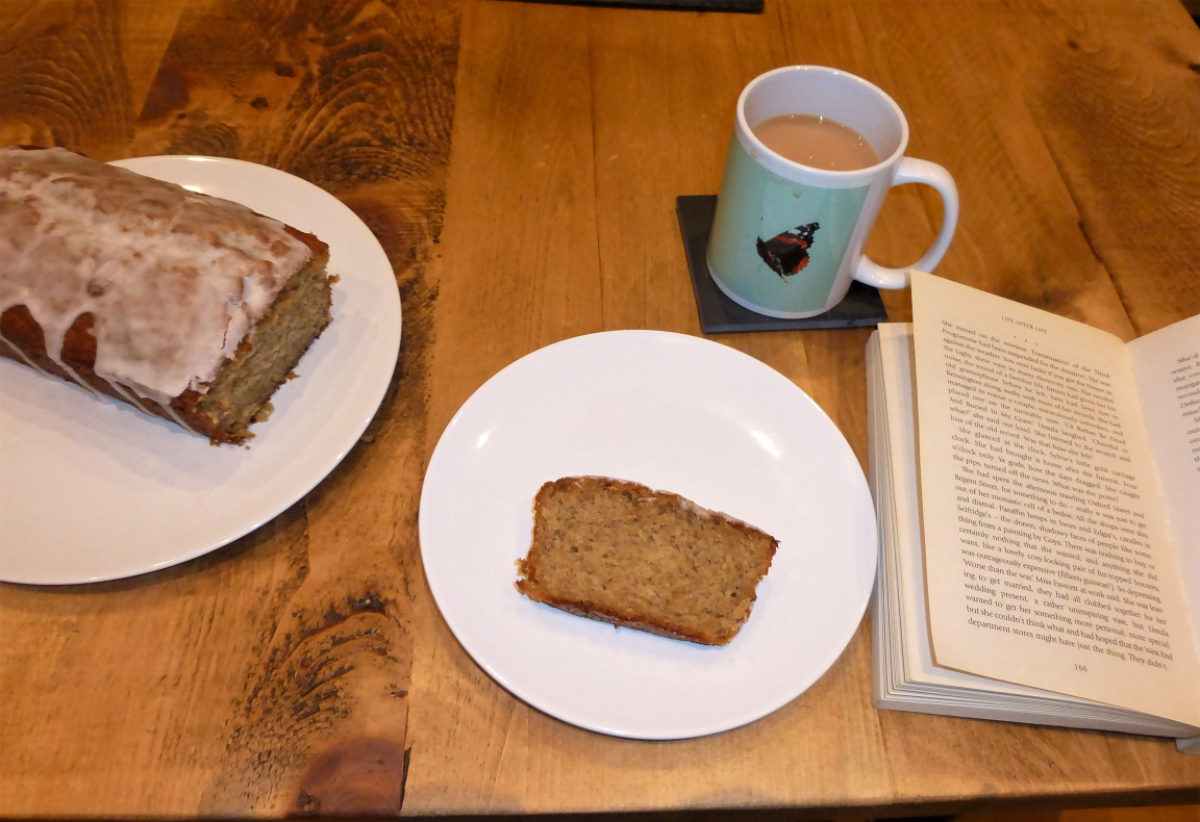
It’s two Irish books in a row. After my last post on Donal Ryan’s 2020 novel Strange flowers, I now turn to Girl in the making, the first novel by the Irish writer, Anna Fitzgerald.
Winner of the 2025 John McGahern prize for the best debut Irish novel, Girl in the making tells the story of Jean Kennedy, a young girl growing up in Dublin. Narrated by Jean, the novel opens in 1966 when Jean is three and tells how she is ‘made’ by the events and people – many of them distressing and abusive – that she encounters over the next fifteen years.
By using Jean’s voice to tell her story, Fitzgerald gives the reader only the same information that Jean has. At times, the reader sees and understands things that Jean cannot, owing to her youth and lack of worldly knowledge and experience; on other occasions we also struggle to make sense of what is going on.
An example of this is found in the opening chapter. Three-year old Jean is at the bottom of her garden ‘where I am not allowed to go – no he says no’, hiding in ‘the golden honeypot’ and waiting for Winnie the Pooh to come and play with her. Then Tom ‘tells’ on her – ‘there she is there she is’ – and ‘he’ enters the scene: ‘come here come here why BECAUSE I SAY SO’. Jean’s ‘shoulders go bump at the lion’s voice’.
Initially the reader is not sure what is going on, but it quickly comes clear that Tom is Jean’s brother and ‘he’ and ‘the lion’ is her father, Edmund, a cruel violent man.
Jean’s behaviour in the opening chapter, hiding from ‘he’, sets the scene for the many difficulties she encounters, primarily from men, as she navigates her way through childhood and towards autonomy – and freedom – as an adult.
But the novel is not all gloom: Jean’s relationships with her mother – Momma – her aunt Ida and her little brother, Baby John F, all bring her joy, as do books and studying. At the end of the novel Jean has embarked on an English degree at Trinity College, Dublin, and has been told by a tutor that her essay on Samuel Beckett is ‘the best essay’ he has ever read. Despite her father, and various other men’s, attempts to unmake her, Jean has defied them and started the journey to make herself into the woman she wants to be.
Jean’s relationship with food runs almost in parallel to her development as a character. As other characters try to make Jean into what they want her to be – or what they want from her – so Jean uses food (or rather the lack of it) as a way of maintaining control over her life. But at the end of the book, as Jean starts to find out who she is and become happy in herself, so there are glimmers of hope that this can include a more positive relationship with food.
Early on in the story, when Jean is only ten, she describes how she helps Momma by looking after the younger children, and also by feeding her. As her heavily pregnant mother lies on the couch, Jean ‘mashed bananas, sprinkled them with sugar and spread them over thick slices of white bread thickly buttered, … That was her favourite meal, banana with sugar on bread and hot tea.’ The simple but joyful description of the food suggests that this is something Jean also takes delight in.
However, this quickly changes. As life around Jean becomes increasingly chaotic and abusive, Jean’s relationship with food changes. When Momma is taken from home – the reader infers that she has been sectioned – a young woman, Tilly, arrives to cook and look after the children. She remains even after Momma returns, cooking an array of French-inspired meals: ‘croques monsieur…. pancakes covered in sucre et citron.’ And Momma eats and eats, so much so that Jean fears that HE and Tilly are doing this deliberately and are ‘fattening Momma up’.
This incident seems to mark the point at which Jean’s relationship with food begins to become more problematic. Not long after this Momma is unwell, with suspected viral meningitis, and refuses to eat. Fearing the worst, Jean turns on the television to distract herself and sees news images of starving Africans:
And then, everything suddenly seemed to fit together. I came to an arrangement with God: he was to make Momma well, and I was to starve like the Africans. Until Momma got better, I would only eat one bowl of food a day. I chose Sugar Puffs with a cup of warm milk. Ten more days passed…
When Momma stirred, and asked for tea and some cream crackers, I blew kisses up through the ceiling to God.
Not only does Jean believe that her starvation has made Momma better, but it has also moulded her body in a way that she finds pleasurable:
By day forty, when I stood sideways in front of the mirror, I was straight as a plank, flat as a boy. There was nothing left of me to grab onto. I was ecstatic… For two months after that there was no blood each month. I knew that I had fallen in love with this hunger, that it would sustain me, and I knew it to be the only thing that was really mine.
At a point in her life when Jean lacks autonomy and cannot prevent bad things happening to both herself and the people she loves, the denial of food gives her a pleasing sense of control.
Later on when she has left home and has ended up in an unsafe situation, forcing her to remain within her bedsit for two weeks, Jean once again deprives herself of food – ‘for a whole week I only had a box of Sugar Puffs to eat’. Even when she is free of that situation and her hunger returns, Jean consumes little food: ‘I was, as I wanted to be, plank-like, Sugar Puffs my mainstay. Twice a day, morning and evening, their sweetness was sufficient to quell my appetite’.
But right at the end of the novel there is a turning point. After receiving the positive feedback from her university tutor on her essay, Jean decides she must see Momma (having been estranged from the family after making allegations about her father). She phones home and speaks to her beloved brother, John, to tell him she is on her way. Putting down the phone, she begins the walk home: ‘Soon it would be dark, but for now the late-afternoon winter sunshine captured every part of me; from every angle it entered me. It penetrated and warmed me. I became aware that I was hungry. Aunty Ida was there; there would be cake.’
That honest hunger and desire for cake need celebrating. Fitzgerald does not specify what cake it is, but earlier in the novel reference is made to an ‘Oxford lunch’ which visitors bring when Momma is in hospital. Having no idea what an Oxford lunch was, I did some research and discovered that it is an Irish cake, a light take on a traditional fruit cake. There are many recipes on the internet, all with some variations, so here is my version. Apparently traditionally an Oxford lunch has flaked almonds on the top. I was house – and cat – sitting for one of my brothers when I made it, and there were no flaked almonds in the house so I didn’t use them, but you could scatter a handful over the top before baking if you wish.
A MADE GIRL’S OXFORD LUNCH
Ingredients:
175g butter
175g caster sugar
3 eggs
Zest and juice of one orange
50g ground almonds
200g plain flour
2 teaspoons baking powder
125g glace cherries
125g raisins
Optional: Handful of flaked almonds
Method:
Preheat the oven to 180C, 160C (fan) or Gas mark 4.
Beat together the butter and sugar in a large bowl until pale and creamy.
Gradually add the eggs to the butter and sugar mixture beating thoroughly after each addition.
Mix in the orange zest and juice.
Fold the flour and ground almonds into the mixture, and then the raisins and glace cherries.
Spoon the cake mixture into a greased and lined loaf tin, and smooth the top with the back of the spoon. If using, sprinkle the flaked almonds over the top.
Bake in the preheated oven for 60-70 minutes, until well-risen, dark gold in colour and a cake tester or skewer comes out clean. If the top is browning too quickly, cover with a piece of foil and continue to bake.

I’m sure your brother will appreciate this – if there’s any left for him! It’s comforting to see that your fruit sank a bit – but it will taste just as delicious!
I left him some in the freezer awaiting his return!