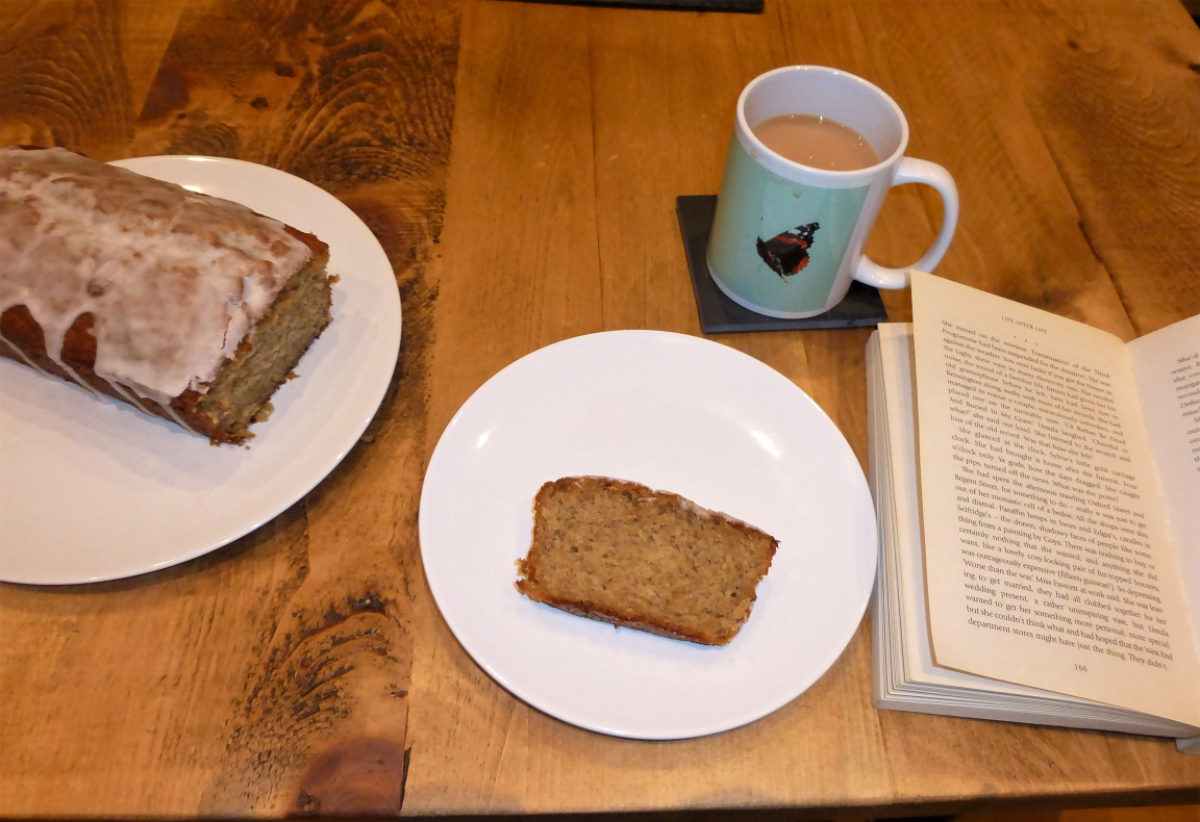
In the novel Strange flowers by the Irish writer, Donal Ryan, characters struggle to fit in and feel they belong.
The novel – published in 2020 – opens with the disappearance of a young woman in 1970s rural Ireland. One day Moll Gladney leaves the home in which she lives with her father and mother, catches an early bus to a nearby town, Nenah, and the train to Dublin and then disappears. Her parents are devastated, neighbours offer sympathy and speculation, and the local priest says a mass for her. But all to no end: Moll has disappeared into thin air.
Five years pass, years in which her parents Paddy and Kit lead a ‘solemn half-life of work and prayers and weakening hope’. And then suddenly, out of the blue, Moll returns…
The Moll who returns initially seems the same as the one who had left five years previously: ‘there was little about her to betray the passage of half a decade of time …she was talking softly and shyly, the way she always used to’.
But gradually differences begin to show: her ears are marked by ‘piercings’, her hair has a ‘wave in it that hadn’t been there before’ and she wears a dress so short ‘that her lap as she sat was almost fully bared’. She has taken up smoking and on her first Sunday back announces that ‘she didn’t want to go to Mass’.
Kit and Paddy do still go to Mass, and when they get back home find Moll in the midst of an almighty row with Ellen Jackman, their landlord’s wife: Moll is screaming at Ellen and telling her to ‘fuck off and mind her own business’, and Ellen storms off ‘her teeth …gritted tight … her face… clouded with rage…her eyes … flashing wet and dangerous’.
The mystery behind this conflict, which serves to explain why Moll, a girl ‘who was without boldness or cheek or any impudent forwardness’ upped and left her family home, will only be revealed in the final chapters of the novel.
Before then though, in fact less than a week later, there is another surprise when the local priest, Father Coyne, and a policeman, Sergeant Crossley, turn up at the Gladneys’ house to report a man staying at a local guesthouse who claims kinship with Moll. Crossley describes the man as an ‘object of suspicion’ because ‘this man is a stranger to the area and to all areas hereabout adjacent and adjunct, and this man speaks with an English accent, and this man is black’. There is no way this man, Alex, belongs to this rural Irish community.
And Alex’s arrival triggers a ‘confession’ in Moll about her feeling of also not belonging. As she tells her mother: ‘I never felt right inside, Mam. From when I was about ten or eleven. There was something wrong with me. Something I couldn’t put a name on’.
But even though Alex does not ‘belong’ to this Irish community, and Moll feels she does not, their young son, Joshua, does. Because, despite his mixed parentage, Joshua looks white: ‘[h]e had black hair… and fullish lips, and his eyes were brown, but his skin was milky white.’ But Joshua’s ‘milky white’ skin conversely means he does not fit into Notting Hill, traditionally a mixed multi-cultural area of West London, where his father and paternal grandparents live. As his grandmother, Delilah says: ‘there is this truth: a black family in Notting Hill cannot raise a white boy, it will be too hard for him, he will not be accepted.’
But despite all this not belonging, things do settle down. Alex is aware that Kit and Paddy feel ‘embarrassed by the sudden presence in their house and in their lives of a tall black stranger’ whilst he struggles to adjust to the ‘[e]verywhere greenness’ of Ireland, after the built-up urban landscape of London. But when he proves to be an asset to the local hurling team, and gets a job in a local aluminium factory he starts to fit in.
And food plays a not insignificant part in that adjustment for all the characters who feel they don’t fit in. When Moll comes home, Ryan paints a scene of family togetherness by the open fire in the cottage, as Kit ‘kneaded her dough, and … tended the lamb joint in the bake pot’. On Fridays when the weather is nice, Paddy, Kit, Alex, Moll and Joshua picnic at the cottage, joined sometimes by Ellen Jackman, enjoying ‘tea…triangled sandwiches and apple tart and currant buns’. And towards the end of the book Kit remembers the days when Alex would come home from the factory and delight in the smell of fresh baking: ‘the smell in this house was like nothing he’d ever smelt before and what the heck was it? Apple tart? Currant cake? Ah, Kit, my love, I’d climb yon mountain, I’d swim yon lake, for just one slice of that currant cake!’
Alex’s love of Kit’s currant cake made me want to make it. I assumed it was just a basic fruit cake, but some research suggested that may not be the case. There are a lot of recipes online for ‘Irish currant cake’ which is actually a sweetened soda bread with dried fruit in, so that’s what I made. Simple and delicious, it will definitely make you feel at home.
A HOMELY CURRANT CAKE
Ingredients:
225g self-raising flour
¼ teaspoon salt
½ teaspoon baking powder
¼ teaspoon bicarbonate of soda
25g caster sugar
10g butter
60g currants
1 small egg beaten
130 ml buttermilk (or 130ml milk and 1 tablespoon lemon juice – mix and leave for 10 minutes)
Method:
Place the flour, salt and baking powder and bicarbonate of soda into a large bowl. Stir in the caster sugar and then rub in the butter using your fingertips. Add the currants and mix to combine.
Make a well in the centre of the bowl and add the egg and buttermilk to make a soft dough.
Turn the dough out onto a lightly floured work surface and lightly shape into a ball. Place on a floured baking tray and gently flatten the top of the cake slightly. Cut a deep cross on top with a sharp knife.
Bake in a preheated oven (180C / 160C fan / Gas mark 4 for 45minutes. Test by tapping the bottom of the bread. If it sounds hollow it’s baked.
Enjoy the day it’s made with butter and homemade jam.
