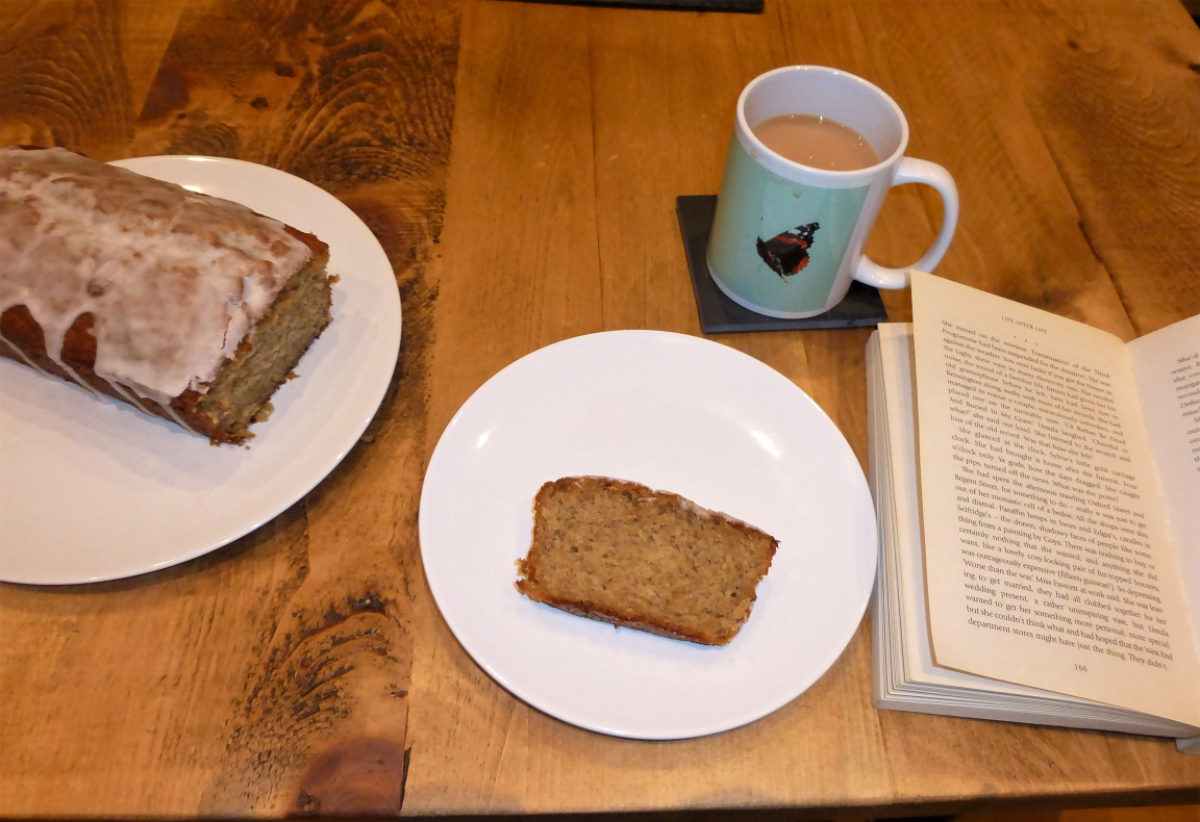
In my last post I wrote about the three adopted sisters in Noel Streatfeild’s Ballet Shoes and how they seek to improve their fortunes through performance, both acting and dance.
Wise Children, the last novel by the English writer Angela Carter, published in 1991 shortly before her premature death from lung cancer in February 1992, also features a family of performers: the Hazard theatrical dynasty.
In fact the characters at the heart of the novel are not actually Hazards, but identical twins, Dora and Nora Chance, the illegitimate daughters of the renowned actor, Melchior Hazard (their surname, a synonym for ‘hazard’ pointing to their indirect relationship with the famed theatrical family).
Dora narrates the novel which opens on her and Nora’s 75th birthday, in their house in Brixton, South London. It is also Melchior’s 100th birthday and the Chance sisters, along with Wheelchair, their father’s first wife (he is now on his third) who lives with them, are getting ready to go to Melchior’s birthday party that evening. There is expectation in the air: as Dora reflects: ‘And I give a little shiver because suddenly I know, I know it in my ancient water, that something will happen today. Something exciting. Something nice, something nasty, I don’t give a monkey’s. Just as long as something happens to remind us we’re still in the land of the living.’
What that ‘something’ might be is revealed at the end of the novel, a novel divided into five sections (like the five acts of a Shakespeare play), which takes the reader back over the last 100 years, unfurling the story of the Hazard – and Chance – dynasties, through to the present day.
Not only does the novel follow a Shakespearean structure, but Melchior, Nora and Dora were all born on 23rd April, the day on which Shakespeare’s birthday is celebrated (though his exact birth date is unknown). Several Shakespearean themes and motifs run through Wise Children – twins, fathers and daughters, deception, separation and loss, resurrection and miraculous endings – and the occasional quotation is woven into the narrative (‘The rest is silence’, ‘a palpable hit’ [both from Hamlet] ‘now God stand up for bastards’ [King Lear]).
And the characters themselves – being performers – frequently act in Shakespeare plays: Melchior’s mother, Estella, makes her London stage debut at the age of eight, playing Mamillius, the young prince, in A Winter’s Tale; she then plays Cordelia, King Lear’s youngest daughter, to Ranulph Hazard’s Lear and father and daughter (in effect) fall in love. The theatrically incestuous nature of their relationship does not bode well, and Estella falls in love with a younger actor, Cassius Booth, and when the three of them play in Othello together in New York reality imitates art with Ranulph killing both Estella and her lover, before committing suicide.
And so it continues throughout the generations. Whilst Dora and Nora are not cut from the same cloth as Melchior et al, lacking their theatrical pedigree, so their first performances are in pantomimes and revues, they work their way up to Shakespeare, appearing as two of the fairies (Peaseblossom and Mustardseed) in Melchior’s Hollywood film adaptation of A Midsummer Night’s Dream.
The food in Wise Children has little connection with Shakespeare, with the exception of a reference to ‘funeral baked meats’ (from Hamlet) to describe the use made of Nora and Dora’s Gran’s pet pig following her (the grandmother’s death) and a ‘nettle soup’ which is made following an old Elizabethan recipe. But some of the other food references are decidedly prosaic and unspectacular: ‘boiled cabbage’ and ‘bread and dripping’.
Another food reference, whilst not Shakespearean, is to a ‘walnut cake’ the making of which is – in my opinion after making it– quite a performance. In the first chapter (act) of the book, young Nora and Dora sit on the knee of their uncle, Peregrine Hazard (their father Melchior’s twin who has assumed legal responsibility as their father) and, whilst searching his pockets for more of the doves he has been bringing forth as part of a magical performance, find instead a ‘Fuller’s walnut cake’. And Fuller’s walnut cake becomes associated with Peregrine who brings it with him on his regular visits to his assumed daughters – ‘he’d sit us on his knee and feed us Fuller’s walnut cake’.
Fuller’s walnut cake arouses nostalgia in Dora who, as her 75 year-old self, comments that this cake has ‘gone the way of all flesh, worse luck’ but expresses a wish to still be able to eat it: ‘I wouldn’t mind a slice of Fuller’s walnut cake right now’.
That nostalgia for Fuller’s walnut cake – according to a Google search, an American invention brought to the UK in the late 19th century – is not confined to Dora; there are a number of references to it, and recipes for it, on the internet. It’s a three tiered cake, with ground walnuts in the cake mixture, and is sandwiched together with butter icing and then covered all over with a boiled icing and caramelised walnuts. It’s definitely the most complicated cake I’ve ever made – actually for my book club where we were discussing Wise Children – but it is delicious. I used Mary Berry’s recipe on the BBC food site, with no amendments, and you can find it here


My birthday is 23 April too! But I think that walnut cake recipe is too much trouble. And I am not baking anything in this heatwave. Thanks for the book recommendation.
Ah, a great date for a birthday!
And fair enough about not baking in a heatwave – I actually made the cake in May when it was much cooler!